

From “Cannons” to “Butter”: Rethinking China’s Growth Model
Professor Tao Ran explains how China’s “race-to-the-bottom” competition fueled export-driven growth while simultaneously embedding systemic risks such as local debt, corruption, and rising inequality.
Quick Takes
- The key turning point for China’s growth model was the 1972 Sino–US rapprochement, which enabled a shift from military production to civilian goods.
- China’s export-led growth resembled Japan and the Asian “Four Tigers,” but stood out for its massive scale and internal “race-to-the-bottom” competition among local governments.
- Wealth from export manufacturing was disproportionately captured by three administrative monopolies: state-owned firms, state banks, and local governments controlling land, contributing to severe inequality.
- China now faces structural pressures from massive local debt, infrastructure overinvestment, a real estate downturn, and growing trade barriers.
- Future stability requires innovative land use, including housing vouchers to absorb excess supply, permitting self-built homes, and encouraging rental housing for migrant workers.
Professor Tao Ran is the Presidential Chair Professor and the Head of Division of Development and Governance in the School of Humanities and Social Science at the Chinese University of Hong Kong (Shenzhen). He holds a PhD in Economics from the University of Chicago (2002).
Echowall: Professor Tao, you have long studied China’s economic transformation and development model. Given China’s rapid economic growth over the past few decades, the concept of the “China model” has generated extensive discussion both domestically and internationally, in academia as well as in the public sphere.
Most observers regard the Reform and Opening in the late 1970s as the origin of the China model, seeing it as the point when China began moving from a planned economy toward a market economy. However, you have proposed a different analysis, identifying the early 1970s as the key historical node and describing it as a shift “from cannons to butter.” Could you explain this in detail?
Why 1972 Matters
Tao: Thank you, I am very pleased to be here at Heidelberg University. For more than twenty years, I have been studying China’s transformation and development model. As we all know, China transitioned from a planned economy to a market economy. But what exactly is a planned economy?
In standard academic literature, it is described as a system in which the state formulates national economic development plans, allocates materials, sets prices, and establishes state-owned and collective enterprises in cities, as well as people’s communes or collective farms in rural areas. Economic development is guided by planning, and the state exercises comprehensive control over materials, capital, and labor.
However, I believe that such analyses capture only the surface of the issue. The Soviet-style planned economy, especially what we call the Stalinist model, was, in essence, about prioritizing the development of machinery, equipment, energy, and raw materials in a backward country. These sectors, which we generally call heavy industry, do not produce final consumer goods; they produce means of production—intermediate goods used to produce agricultural and industrial consumer goods.
Yet in the Soviet model, most of the machineries and raw materials produced by heavy industry were not used to supply the light industrial and agricultural goods needed by ordinary people. In my view, the fundamental goal of that system was to devote the overwhelming majority of heavy industrial output to producing “cannons” what the government need rather than “butter” for the ordinary people. In order to maximize “cannon” production, “butter” production had to be compressed. Through agricultural collectivization, as much grain and other agricultural products as possible were extracted, either to earn foreign exchange to purchase equipment for heavy industry, or to provide cheap food to urban workers so that they could be paid very low wages while still surviving. Essentially, “butter” was sacrificed for “cannons”: the tools necessary to consolidate and defend political power after seizing control over the country.
During Stalin’s lifetime and throughout the early Cold War period, the priority was always to maximize “cannons” and minimize “butter”. Over time, this model generated dissatisfaction among both officials and the public.
After Stalin’s death, Khrushchev attempted to redirect some machinery and raw materials from serving “cannon” production to serving “butter” production. However, this antagonized powerful vested interests within the military-industrial complex. Moreover, he did not change the micro-level structure of consumer goods production; it remained based on state-owned enterprises and collective farms. Even though inputs into “butter” production increased, the results were limited.
How could this dilemma be resolved? One approach was to discover and export more oil and natural gas. By earning foreign exchange through energy exports, the Soviet Union could generate additional resources, allocating some to “cannons” and some to “butter”. Later on, oil-export revenues were even used directly to import consumer goods.
Thus, beginning in the mid-to-late 1960s, large-scale development and export of oil and gas enabled the Soviet Union to increase both “cannons” and “butter”. It also provided funds for geopolitical expansion, supporting countries in Asia, Africa, and Latin America that opposed the Western bloc led by the United States, as well as opposition forces within other countries. As a result, the Soviet Union became increasingly assertive on the international stage. This, in turn, contributed to bringing China and the United States, which had been former adversaries after the Korean War, closer together.
In 1972, China and the United States moved toward rapprochement. This adjustment in the triangular relationship among China, the United States, and the Soviet Union reduced China’s military pressure.
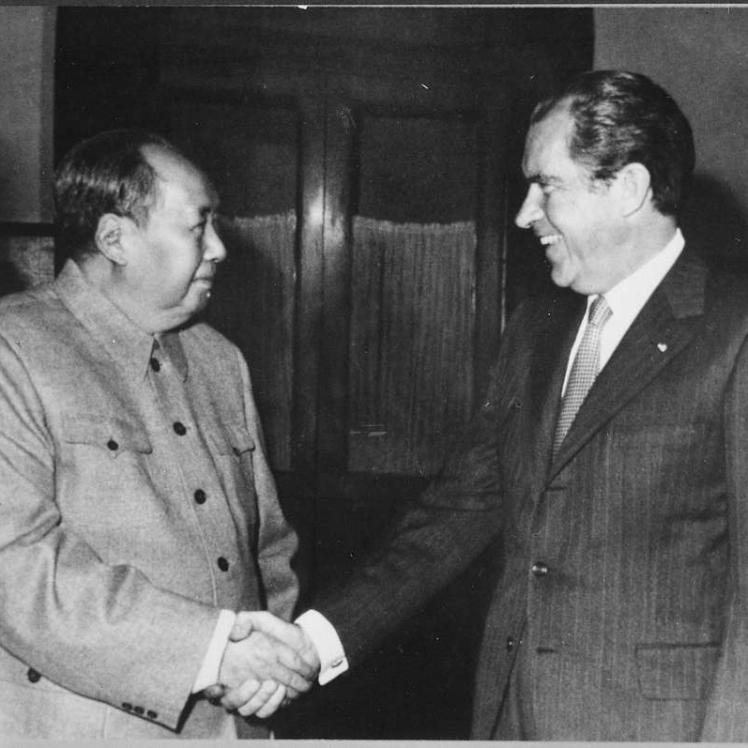
Nixon shaking hands with Mao in Beijing in 1972.
Source: https://catalog.archives.gov/id/194759
The Sino-Soviet split emerged in the late 1950s after Stalin’s death, as tensions deepened between Mao Zedong and Nikita Khrushchev over de-Stalinization and competing leadership claims within the socialist camp. In the 1960s, these tensions escalated into armed Sino-Soviet border conflict, most notably the 1969 fighting around Zhenbao (Damansky) Island, accompanied by Soviet hints at possible nuclear strikes on China. Amid these fears, Mao temporarily evacuated Beijing and decided to seek a strategic opening to Washington; within months, China opened secret channels to the United States, culminating in U.S. President Richard Nixon’s historic meeting with Mao in 1972, which reshaped the global Cold War balance.
Beginning in 1972, China started to redirect resources that had previously served military production toward civilian production. Many centrally controlled factories that had been producing for the military were decentralized to local governments. These local governments then used the intermediate goods produced by these factories to gradually expand consumer goods.
This shift alleviated China’s military pressure while simultaneously increasing pressure on the Soviet Union. The year 1972 was therefore a crucial historical node.
As I mentioned earlier, the essence of the planned economy was to prioritize “cannons” and compress “butter”. The essence of transitioning from a planned economy to a market economy is to reduce “cannons” and redirect resources toward “butter”, toward improving people’s living standards, and ideally to produce “butter” using market mechanisms by introducing price signals and incentives.
The easing of Sino-American relations in 1972 created the conditions for China to shift from “cannons” to “butter”. Of course, the decisive turning point came in 1978, when China began using market mechanisms to produce “butter”.
At the same time, this geopolitical shift made it even more difficult for the Soviet Union to move from “cannons” to “butter”. From the mid-to-late 1970s onward, cooperation between China and the United States increased military pressure on the Soviet Union. Even when Gorbachev came to power in the 1980s and sought reform, the military-industrial complex remained too powerful. He did not dare significantly reduce military expenditures. Without reducing military pressure, it is extremely difficult to shift away from a “cannon” economy.
By contrast, the easing of military pressure in 1972 created a necessary precondition for China’s reform. It was not, however, sufficient on its own. The political changes of 1976 and 1978 brought to power leaders who were less constrained by old ideological commitments. Only then did it become possible to launch and implement market-oriented reforms aimed at expanding butter production and raising living standards. That is the underlying logic.
From Domestic Reallocation to World’s Factory
ECHOWALL: Thank you, Professor Tao. That was truly fascinating. The distinction you draw between a historical “node” and a “turning point” is very illuminating. Western analyses often focus only on the later turning point and tend to concentrate on individual leaders such as Deng Xiaoping, particularly regarding China’s push to expand exports, given its need at the time for foreign capital and foreign exchange.
Tao: Exports really began to take off only after the 1990s. In the 1980s, they were relatively limited.
ECHOWALL: Then what characterized the 1980s? Could you explain?
Tao: In the 1980s, exports contributed to growth to some extent, but in fact China imported more than it exported in many years. To produce “butter”, we needed more fertilizer and synthetic fibers. China acquired a great deal of fertilizer, machinery and petrochemical technologies from Japan, Europe, and the United States. In essence, as military spending declined, the country redirected resources toward importing machinery and materials to support civilian production.
Economic growth in the 1980s mainly came from reallocating machinery, energy, and raw materials that had previously served the military industry from central control to the local level. Local governments responded by establishing township and village enterprises (TVEs) and expanding local state-owned enterprises; private firms were virtually nonexistent at the time. Reform began in the late 1970s in agriculture with the household responsibility system, which unleashed rural productivity, and then moved into light industry, producing the everyday goods people wore and used.
From the late 1970s to the early 1990s, China’s growth was driven largely by reallocating resources from “cannons” to “butter” and by introducing market incentives into publicly owned enterprises. Although these enterprises were publicly owned, they operated according to market principles: purchasing inputs on the market, hiring from a vast pool surplus rural and urban labor, and selling products at market prices.
In the early reform years, consumer goods were scarce, and profitability was relatively easy to achieve. As enterprises generated profits, other localities followed suit. As a result, China moved from widespread poverty of the late 1970s, when many people struggled to meet even basic needs, to broad-based growth across all provinces by the 1990s. Living standards rose significantly.
Crucially, these enterprises adopted performance-based incentives: Profitable firms were permitted to retain a portion of their earnings and distribute bonuses to managers and workers, a change that improved labor productivity.
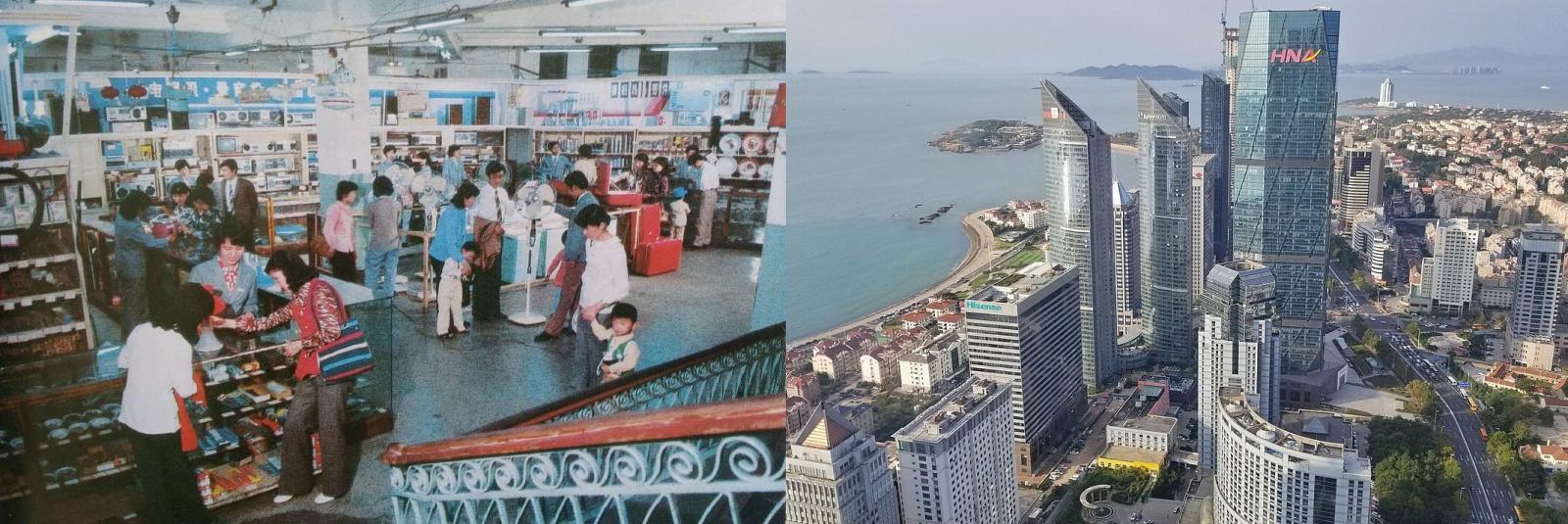
Left: Qingdao Zhongshan Road department store, 1988; Right: Qingdao skyline, 2018 (photo by Dan Nevill). Source: Wikimedia Commons.


However, by the mid-1990s, domestic consumer goods production suffered from overcapacity and low quality. Quantity was sufficient, but products lacked international competitiveness.
The true shift toward an export-oriented economy began with Deng Xiaoping’s Southern Tour in 1992, which restarted market reforms after the political setbacks of the late 1980s. At the same time, the East Asian “Four Tigers” were upgrading their industries. Local officials in Guangdong began attracting investment from Hong Kong, later from Taiwan, South Korea, and Singapore. Labor-intensive export clusters emerged in the Pearl River Delta.
By the late 1990s, the Yangtze River Delta, especially southern Jiangsu cities such as Suzhou, Wuxi, and Changzhou had reached a turning point. During the 1980s, these areas had established large numbers of TVEs as well as locally owned state enterprises. But as overcapacity worsened and product quality lagged, many of these firms faced bankruptcy or restructuring.
In response, local governments began studying Singapore’s model of industrial park. They expropriated land on a large scale and built industrial development zones designed to attract investment. Beyond drawing in new foreign capital, they actively courted existing Hong Kong– and Taiwan–funded manufacturers operating in the Pearl River Delta, persuading them to relocate or expand into the Yangtze River Delta. The result was a nationwide surge in investment promotion and interregional competition for capital. From the mid-to-late 1990s through China’s accession to the WTO, coastal China developed powerful manufacturing clusters and became the world’s factory for consumer goods. That was the overall process.
The Race-to-the-Bottom Competition
ECHOWALL: So in the 1990s, China was in many ways following the development path earlier taken by Japan and the East Asian “Four Tigers.” But you argue that China’s model also differed significantly. Could you compare them?
Tao: Yes. In the late 1990s, China’s export-oriented model was indeed build by investors from Hong Kong, Taiwan, South Korea, Singapore, and Japan. Early on, more than 70 percent of exports were generated by foreign-invested enterprises. In this respect, China resembled other East Asian economies: Growth was export- and investment-driven, capacity was high, and output was primarily absorbed by international markets.
At that stage, Japan and the so-called Four Asian Tigers all shared certain features: labor was tightly controlled, independent unions were restricted, and wage growth remained modest. Governments offered preferential loan rates and tax incentives to firms that achieved import substitution or earned foreign exchange through exports. Under this model, labor was inexpensive and capital was cheap, encouraging sustained investment. At the same time, household income accounted for a relatively low share of GDP, suppressing domestic consumption. As a result, national output typically exceeded domestic demand, and central governments maintained undervalued exchange rates to ensure export competitiveness.
Whether in Japan, the Four Asian Tigers, or China in the late 1990s, particularly after its accession to the WTO in 2002, all benefited from a favorable international environment. Western markets were willing to open their doors and absorb surplus production, which translated into a steady supply of inexpensive consumer goods for their own economies. This was a defining similarity between China and the broader East Asian development model.
Where China proved more extreme, however, was in scale and internal dynamics. As a vast country, China not only relied on central policies such as low interest rates, a managed exchange rate, and labor controls to promote industrial growth; it also depended heavily on assertive local governments. As in southern Jiangsu, local authorities across much of the country exercised significant power. They could expropriate land from farmers at low compensation rates and transfer industrial land-use rights to manufacturers at extremely low prices, often on 50-year terms and sometimes below cost.
Once firms were established, local governments frequently turned a blind eye to environmental damage or inadequate labor protections. Thousands of industrial parks were built, with local governments competing fiercely to attract investment. Such domestic competition of this scale was largely absent in the smaller East Asian economies.
At the same time, the central government engaged in international race-to-the-bottom competition by keeping the exchange rate low and offering export rebates. The combination of these two layers—domestic and global—greatly enhanced China’s manufacturing competitiveness. The result was the rapid expansion of a foreign-capital-led, export-driven private manufacturing sector on a scale that early Japan and the Four Asian Tigers could not match.
ECHOWALL: That leads to your well-known “3-2-1 model.” Could you explain it again?
Tao: The “2” refers to the two layers of race-to-the-bottom competition: international and domestic.
The “1” refers to market-oriented private manufacturing firms, initially dominated by foreign investment, later increasingly by domestic private enterprises, competing in global markets. Riding the wave of “hyper-globalization” in the mid-to-late 1990s, and especially after China joined the WTO, the country achieved extraordinary export growth. After 2000, China rapidly became the world’s factory for a wide range of consumer goods, saturating large segments of developed-country markets. This export boom underpinned three decades of remarkable economic expansion, sharply rising living standards, and significant income and wealth gains.
However, a large share of the wealth generated by market-driven private manufacturing was absorbed by three forms of administrative monopolies, that is the “3” refers to.
"Upstream state-owned enterprises, state-owned banks, and local governments’ monopoly over commercial land together siphoned off a large share of the income and wealth generated by export-led growth. This dynamic contributed to increasingly unequal income and wealth distribution."
First, upstream state-owned enterprises in sectors such as energy, raw materials, and high-end equipment manufacturing, as well as non-financial services like telecommunications and transportation, exercised monopoly power and extracted substantial rents. Second, China’s financial system, dominated by state-owned banks, captured significant rents during the process of economic expansion. Third, while local governments supplied industrial land at low cost to attract investment, they tightly controlled and limited the supply of commercial and especially residential land, creating another powerful source of monopoly rent.
In short, upstream state-owned enterprises, state-owned banks, and local governments’ monopoly over commercial land together siphoned off a large share of the income and wealth generated by export-led growth. This dynamic contributed to increasingly unequal income and wealth distribution.
ECHOWALL: China generated enormous wealth through exports, much of which accumulated in the hands of central and local governments. With these resources, they were able to undertake massive investment, particularly in infrastructure. High-speed rail is often cited as an example that many Western observers envy, given underinvestment in their own systems. During your visit to Germany, for instance, you experienced delays on Deutsche Bahn firsthand. In contrast, China has built numerous new high-speed rail lines and stations, and trains are known for their punctuality. Some argue this reflects the efficiency and execution capacity of the Chinese government. How do you view this phenomenon?
Tao: China has experienced several waves of infrastructure expansion. One occurred in the mid-to-late 1990s, when economic conditions were weak and Premier Zhu Rongji pushed for infrastructure improvements. The government even borrowed funds to finance large-scale projects, which in hindsight helped lay the groundwork for the golden period of growth between 2002 and 2008 following WTO accession. At the time, infrastructure was underdeveloped, and investments in transportation and logistics were both necessary and productive.
The truly massive surge, however, came after the 2008 global financial crisis. Before the crisis, exports had been growing at rates exceeding 20 percent annually. When external demand collapsed, the government turned to successive rounds of infrastructure construction to stabilize growth: high-speed rail, new industrial development zones, entire new urban districts, and even subway systems in cities with limited demand. Numerous projects followed, from “smart cities” and “sponge cities” to rural revitalization and environmental initiatives.
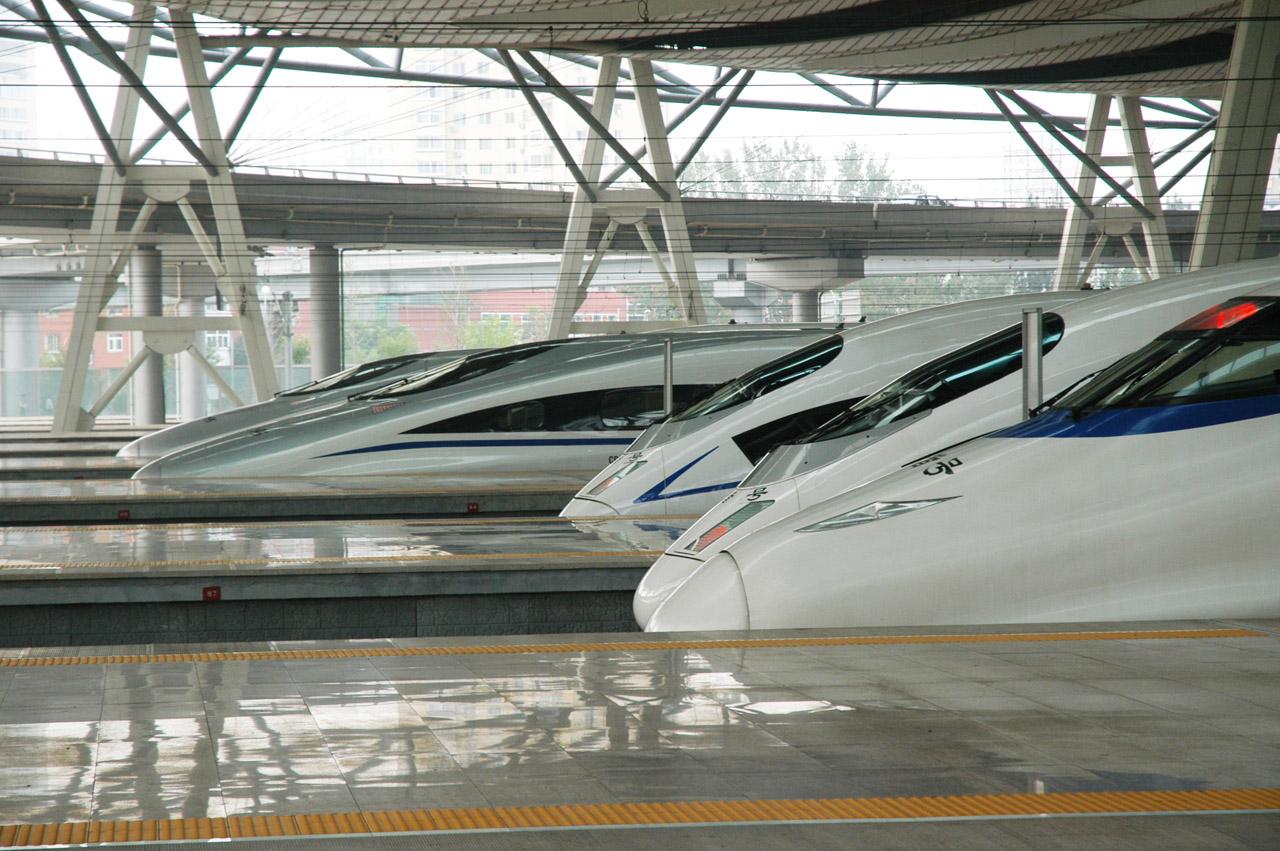
Chinese high-speed trains; photo by Scott Meltzer, CC0 Public Domain.
There is no doubt that China’s infrastructure expansion has been remarkably rapid. Yet the process has also generated significant challenges. High-speed rail construction in the eastern regions and along major corridors linking east and west made economic sense, even if some lines were not immediately profitable. But as expansion extended into parts of central and western China with insufficient demand, the financial viability of many projects became questionable. China State Railway Group now carries debt on the order of six to seven trillion yuan and continues to invest roughly 800 billion yuan annually in new projects. While earlier lines were often profitable, later expansions are less so. At some point, the question must be asked: how much high-speed rail is economically justified?
For many cities, the heavy borrowing used to build industrial development zones and lavish construction has left local governments with extremely high debt. To give some numbers: by 2009, local government debt in China was roughly 5 trillion yuan; by 2010, it had doubled to 10 trillion yuan; and today, total local debt likely exceeds 1,00 trillion yuan. It’s important to note that Chinese local governments have an advantage not found in many other countries: revenue from land sales. From 2008–2009 onward, land sale proceeds have totaled around 80 trillion yuan. Much of that has already been spent, and local governments have borrowed an additional 100 trillion yuan, bringing total expenditures to about 180 trillion yuan, a staggering sum.
Of this money, some was used to raise salaries for civil servants and staff in public institutions, and a portion went to pay interest, but the majority was spent on various infrastructure projects, many of which were excessive. Local officials undertaking these lavish projects were largely aware that some investments might not be recovered, yet they proceeded. Why? Partly for political credit, but also because these projects created ample opportunities for rent-seeking. Over the past few years, anti-corruption campaigns have increasingly targeted officials, and the reason is clear: vast sums of money were spent, massive debts accumulated, and corruption proliferated.
In other words, the three monopolies I mentioned earlier, the state-owned enterprises, state banks, and local governments, controlled enormous rents. By channeling public funds into large-scale infrastructure projects, a significant portion of the money ended up in the hands of well-connected individuals, which created additional challenges for anti-corruption efforts and left the situation far from ideal.
Structural Challenges and Outlook
ECHOWALL: In recent years, local government debt has ballooned, and the real estate bubble has burst. It has become much more difficult for local governments to rely on land sales to generate massive revenues. With sluggish domestic consumption, does this mean this growth model faces a fundamental challenge?
Tao: Yes. After 2015, the Chinese government recognized that the real estate sector is largely financially driven and emphasized the need to invest in the real economy. Many local governments, in addition to operating urban investment companies, also established industrial investment companies to promote new sectors, including electric vehicles, photovoltaics, and batteries. Over the past decade, these industries have advanced rapidly, with sectors like the “new three” now accounting for roughly 50 to 60 percent, and in some cases up to 70 to 80 percent, of global production capacity. Domestic competition is also intense, and technological iterations happen very quickly, driving costs down and enabling China to expand exports. While this has continued to support China’s rapid foreign exchange earnings, it has also prompted other countries to feel overwhelmed by the competition, leading them to adopt various trade protection measures.
In the coming years, exports will certainly face multiple obstacles. Nevertheless, we hope China’s exports can continue to grow for some time, since they remain a fundamental engine of the country’s economic growth. The real estate sector, however, accounts for roughly 25 percent of China’s GDP and up to one-third of employment and create a very difficult challenge. If this sector were to collapse entirely, it would have a severe impact on domestic economic growth and employment. From 2009 onward, China implemented five rounds of large-scale fiscal and credit stimulus, which contributed to a serious real estate bubble. After the government imposed strict housing controls in 2020, the sector entered a phase of bubble collapse. In many third- and fourth-tier cities, which are major sources of population outflow, housing is now severely oversupplied, and both population and industry are relocating elsewhere. I believe that these markets cannot be rescued quickly and may require a long-term process of one to two decades to gradually absorb the excess.
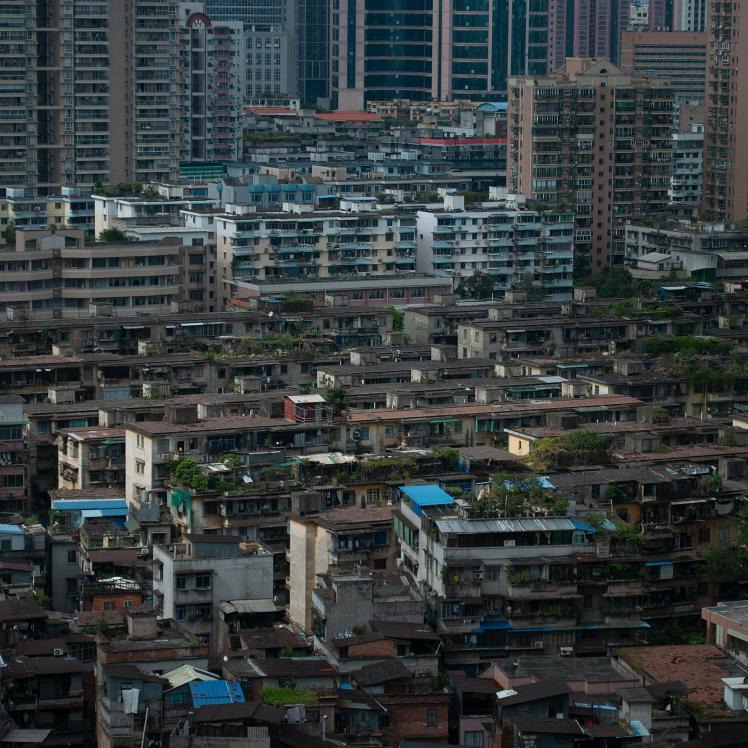
Densely Built-up Residential District in Guangzhou, Photo by 比加 滕 from Pexels
For first- and strong second-tier cities, however, failure to stabilize the real estate market could generate significant short- and medium-term shocks to the financial system and the broader economy. I have recently proposed measures to address this. In many prime areas of these cities, residents still live in old residential blocks and urban villages with poor conditions. Local governments could borrow funds from the National Development Bank and issue housing vouchers to residents in these communities. Residents would then use the vouchers to purchase unsold apartments elsewhere in the city.
This approach effectively replaces old housing with new units while transferring the original land use rights to the government. In the short term, it would help absorb excess housing supply in cities with population inflows and support price stability. Over the medium to long term, the reclaimed land, often located in desirable areas, could be re-leased or sold, generating revenue to repay the loans used to finance the housing vouchers.
Another approach is to allow middle- and upper-income households to purchase underutilized urban or peri-urban land for self-built homes. Chinese households hold roughly 160 trillion yuan in savings, much of it concentrated among an estimated 20 to 30 million affluent families. Most of these households already own at least one urban apartment, and some own several, yet what they increasingly seek are detached houses rather than standard apartment units.
In and around many cities, there is still underutilized urban land, low-efficiency construction land, and gently sloping areas on the urban fringe. If local governments were to release limited parcels of such land to affluent households, for example plots of half a mu to no more than one mu per family (one mu equal to about 667 square meters), and allow them to build their own homes, demand would likely be strong. In China, purchasing such land entails acquiring a seventy-year land use right from the government.
In addition, China still has 200 to 300 million migrant workers, with at least 100 million living in cities that are experiencing net population inflows. Many of them reside either in urban villages or in collective dormitories under poor conditions. At the same time, cities contain substantial areas of low-efficiency industrial land. With appropriate policies, market capital could be allowed to develop rental housing on such land, priced according to market principles, thereby improving living conditions for migrant workers.
Take Shenzhen as an example. About 25 percent of its urban land is designated for industrial use, though 15 percent would likely suffice. Converting 10 percent of that industrial land into residential use, and permitting the construction of rental housing under defined conditions, could make a significant difference. The construction cost per square meter would be only 2,000 to 4,000 yuan. These units could then be rented to migrant workers who have worked in the city for many years, as well as to recent university graduates.
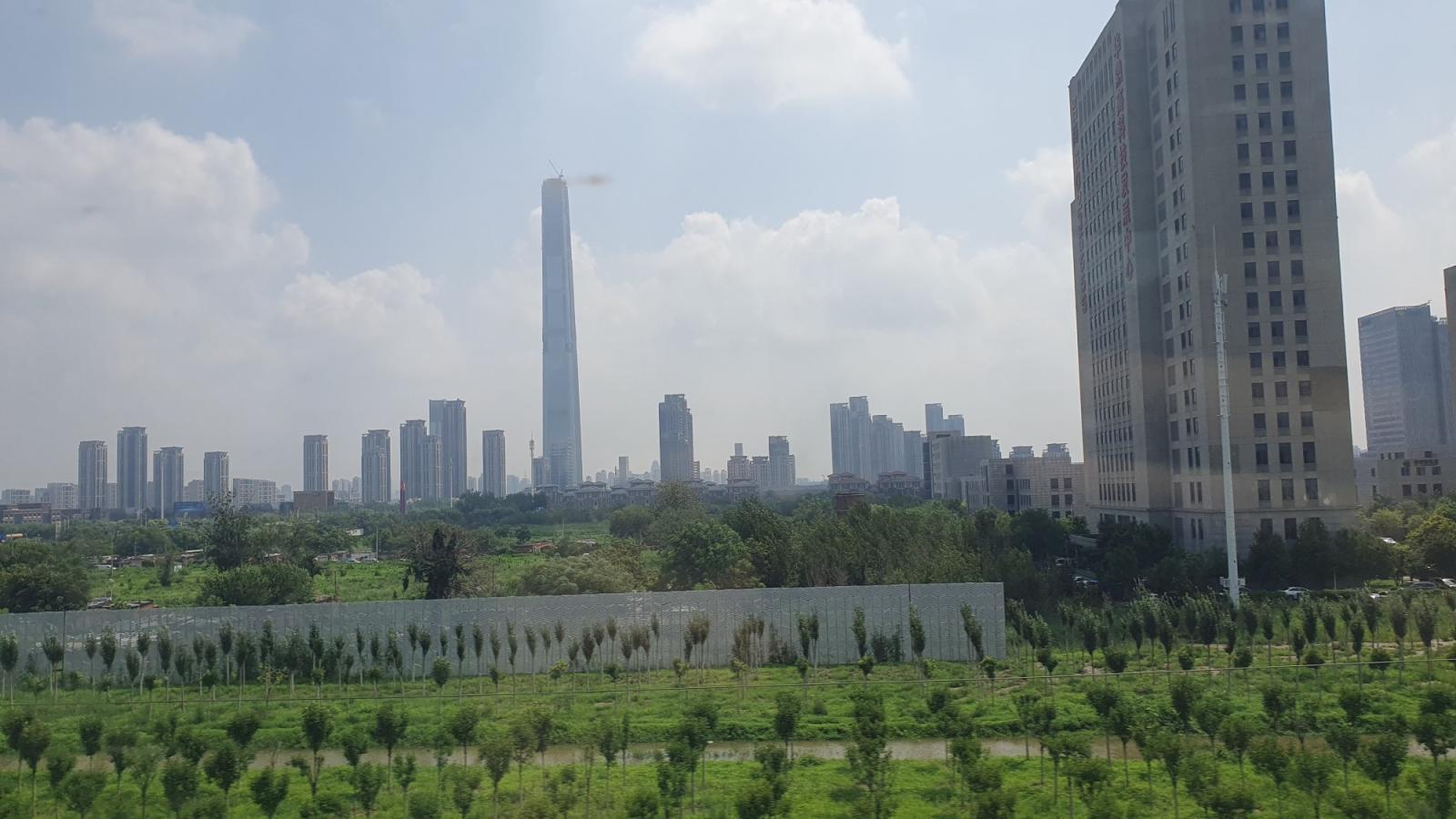
Buildings on an urban fringe in China, photo by Anja Senz.